7 best employee survey and employee listening tools for large enterprises in 2026
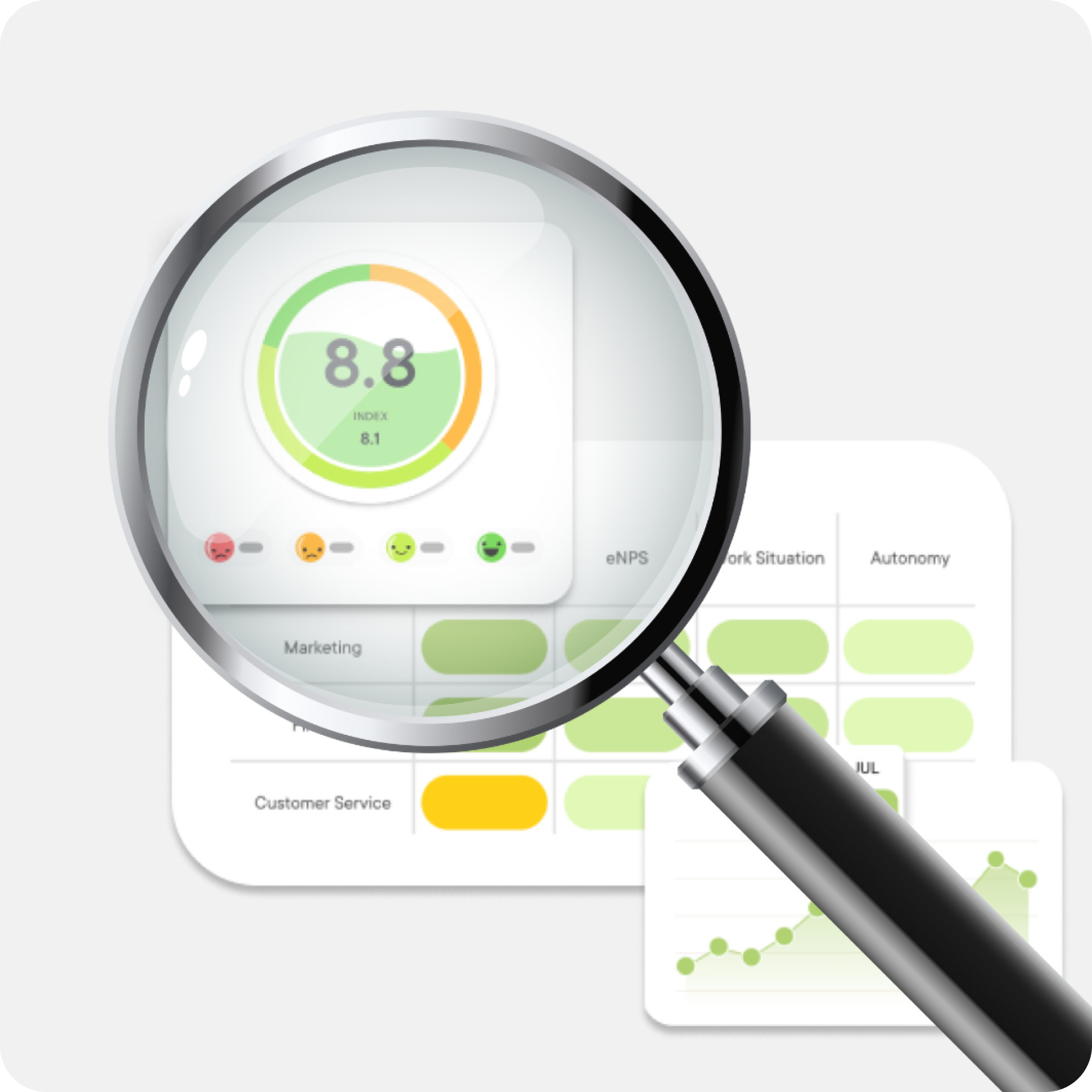
Running employee surveys at scale is tricky. You need a tool that can handle thousands of responses, surface patterns across departments, and give leaders the data they need to act quickly. Most enterprises also run more than one kind of survey: an annual engagement survey, quarterly check-ins, pulse surveys, and lifecycle surveys from onboarding to exit. Winningtemp gives you all of these in one employee listening platform, with research-based questions and predictive analytics, but it's not the only option out there for enterprise employee survey tools.
This guide breaks down seven platforms designed for large organizations with complex feedback needs. You'll find detailed reviews, feature comparisons, and practical guidance to help you choose the right fit for your employee listening goals.
Each tool on this list has been evaluated for its ability to deliver actionable insights at enterprise scale, because collecting feedback is only useful if you can turn it into meaningful change.
What is employee listening?
Employee listening is the process of gathering, analyzing, and acting on employee feedback across an organization.
It allows companies to understand what employees are experiencing, identify emerging challenges, and make informed decisions that improve the employee experience and overall business performance. An employee listening strategy usually combines several survey types, such as annual engagement surveys, pulse surveys and lifecycle surveys, with open comments, conversations and manager follow-up.
However, collecting feedback alone is not enough: action is what's important. Data from thousands of organizations shows that when employee feedback is consistently acted on, it leads to improvements in engagement like higher trust in leadership, stronger participation, and increased employee initiative.
Types of employee surveys enterprises use
Most large organizations use a mix of the survey types below. A good platform lets you run all of them and compare results across them.
- Annual engagement survey: An organization-wide survey once a year that covers engagement, leadership, well-being and work environment. It gives you a full baseline that is comparable year on year, and it is the format most boards and leadership teams expect.
- Quarterly engagement survey: A shorter survey every three months that checks progress on the priorities set after the annual survey.
- Pulse survey: A short survey sent weekly, bi-weekly or monthly with a few questions each time. Pulse surveys follow trends between larger surveys.
- Lifecycle surveys: Onboarding, role change, promotion and exit surveys that reach employees at the moments that decide whether they stay.
- Focus or topic surveys: Targeted surveys on one subject, such as organizational change, hybrid work or the psychosocial work environment.
- eNPS (employee Net Promoter Score): A single question about how likely employees are to recommend their workplace. Useful as a quick indicator, but not a full picture on its own.
- Conversational listening: AI-led follow-up conversations that collect the context behind survey results, anonymously.
How we chose the best employee survey tools for large enterprises
Finding the right survey platform means looking beyond feature lists. You need something that fits how your organization works, and helps you act on what you learn. Here's what we looked for when putting together this list:
- Enterprise scale: Can it handle feedback from thousands of employees across multiple locations without slowing down or breaking?
- Survey flexibility: Does it support annual, quarterly, pulse and lifecycle surveys, or only one cadence?
- Analytics depth: Does the platform surface meaningful patterns, or does it just give you raw numbers to sort through yourself?
- Ease of use for managers: Can leaders at every level interpret results and take action without needing extensive training?
- Speed to action: How quickly can managers access results and start making changes based on what they see?
- Privacy and compliance: Does it meet GDPR, ISO 27001, or other security standards your organization requires?
The 7 best employee survey tools for large enterprises
Here is how each platform handles annual, pulse and lifecycle surveys, analytics and manager follow-up.
1. Winningtemp: Best for hybrid employee listening across annual, quarterly and pulse surveys
Winningtemp stands out for hybrid listening: you can run an annual engagement survey, quarterly check-ins, weekly pulse surveys and lifecycle surveys in the same platform, or only the ones you need. Winningtemp also focuses on giving leaders relevant insights they can act on immediately, with a toolkit for Manager Deep Dives to further understand the results. The platform runs science-based surveys that measure engagement, well-being, and performance indicators, built on 600+ validated studies across 18 research-based categories.
What makes Winningtemp different is its approach to turning feedback into action. The AI-powered analytics don't just report scores. They highlight trends, flag areas that need attention, and help managers understand what's driving changes in their teams. This means you're not left staring at a dashboard wondering what to do next.
For large organizations, Winningtemp delivers heatmap analysis that lets you compare engagement across departments, locations, or any custom segment you define. The churn prediction feature is particularly valuable: it detects early signs of dissatisfaction and alerts managers before turnover becomes a problem. After an annual or quarterly survey, engagement reports and PDF summaries are generated in one click, structured for leadership and board conversations.
Winningtemp features
- Annual and quarterly engagement surveys: Organization-wide surveys built on your own questions and science-based templates, with built-in comparison against previous periods and benchmarks.
- Pulse surveys: Automated weekly or bi-weekly surveys that take about 15 seconds to answer and track sentiment changes between larger surveys.
- Lifecycle surveys: Onboarding, role change, promotion and exit surveys that reach employees at key moments.
- Manager Deep dive tools: AI Conversation, Focus surveys and Temperature meetings to go beyond the survey results
- Predictive turnover and absenteeism analytics: AI-driven alerts that identify employees at risk of leaving, so you can intervene early rather than reacting after they've handed in their notice.
- Heatmap visualization: Visual breakdowns of engagement data across teams, departments, and locations that make it easy to spot patterns at a glance.
- Anonymous feedback channels: Employees can share candid comments without fear of identification, and managers can respond while maintaining confidentiality.
- Action planning tools: Built-in features that help managers create and track improvement initiatives directly tied to survey results.
- Benchmark comparisons: See how your engagement scores stack up against industry standards and other organizations of similar size.
- Board-ready reporting: One-click engagement reports, PDF summaries and role-tailored summary emails for HR, managers and leadership.
- Security and languages: ISO 27001 and ISO 27701 certified, GDPR aligned, with surveys in 34+ languages.
Winningtemp pros and cons
Pros:
- One platform for annual, quarterly, pulse and lifecycle surveys, so you can change cadence without changing vendor
- Winningtemp gives managers clear insights after every survey, annual or weekly, that make it easy to act quickly on feedback
- The predictive analytics help you prevent turnover rather than just measuring it after the fact
- Survey questions are developed based on organizational psychology research
Cons:
- The platform focuses on employee listening rather than broader HR functions such as payroll or recruiting
- Getting the most value requires managers to engage regularly with the dashboard and insights
- Initial configuration takes some time to align with your organizational structure, but support teams help streamline the process alongside integrations to your HR suite
2. Qualtrics Employee Experience: An option for research-grade survey flexibility
Qualtrics offers an enterprise experience management platform that covers employee surveys as part of a broader feedback ecosystem. The platform includes engagement, pulse, and lifecycle surveys with customizable templates and advanced survey logic.
The analytics capabilities include AI-assisted manager tools that surface recommendations based on survey results. The platform also integrates with HRIS systems for automated survey distribution based on employee milestones. Organizations with dedicated research teams may find value in the platform's flexibility for custom survey design.
Qualtrics features
- Customizable survey logic: Build complex survey flows with branching, skip logic, and conditional questions.
- Benchmarking data: Compare results against industry and company-size benchmarks.
- Attrition driver analysis: Identify factors that predict turnover risk across employee segments.
Qualtrics pros and cons
Pros:
- Offers flexible survey design for organizations with specific research requirements
- Includes AI-guided recommendations for managers based on survey data
- Part of a broader experience management platform covering customer and brand feedback
Cons:
- The platform's breadth can make it more complex to configure and navigate
- Pricing is quote-based, making it harder to compare costs upfront
- Some users report inconsistent response times from customer support
3. Culture Amp: A platform with benchmark data for comparative analysis
Culture Amp positions itself as an employee experience platform with survey templates built by organizational psychologists. The platform offers engagement, pulse, onboarding, and exit surveys with AI-powered comment summaries that highlight themes in open-text responses.
The benchmark database includes data from organizations across industries, allowing you to compare your results against similar companies. Action planning tools help managers move from results to structured improvement initiatives.
Culture Amp features
- Template library: Access 40+ pre-built survey templates covering various employee lifecycle stages.
- AI comment summaries: Automated analysis that surfaces recurring themes from open-ended feedback.
- Retention insights: Analytics that identify factors correlated with turnover risk.
Culture Amp pros and cons
Pros:
- Offers a large benchmark database for organizations wanting external comparisons
- Survey templates are designed based on organizational psychology research
- Includes tools for performance management alongside engagement surveys
Cons:
- Some analytics features require additional time to learn and configure
- Pricing requires contacting sales for a custom quote
- The company is based in Australia, which may affect data hosting considerations for some European organizations
4. Workday Peakon Employee Voice: Works well for Workday HCM users
Workday Peakon Employee Voice integrates directly with the Workday HCM ecosystem, making it a logical choice for organizations already using Workday for HR operations. The platform offers intelligent surveys that adapt questions based on previous responses.
The analytics include natural language processing for analyzing open-text comments and dashboards personalized for different user roles. The True Benchmark feature adjusts comparisons based on demographic variations across your workforce.
Workday Peakon features
- Adaptive surveys: Questions adjust based on prior feedback to reduce survey fatigue.
- NLP comment analysis: Machine learning processes open-ended responses to extract meaning.
- Confidential conversations: Two-way anonymous messaging between managers and employees.
Workday Peakon pros and cons
Pros:
- Integrates natively with Workday HCM for unified workforce data
- Offers personalized dashboards for different organizational roles
- Includes attrition prediction based on engagement patterns
Cons:
- Works most effectively for organizations already committed to the Workday ecosystem
- Switching to alternative providers can be challenging due to data integration dependencies
- Pricing information is not publicly available
5. Microsoft Viva Glint: Connects sentiment with Microsoft 365 data
Microsoft Viva Glint combines employee surveys with workplace analytics from the Microsoft 365 ecosystem. The platform includes engagement, lifecycle, and 360-degree surveys with Copilot-powered comment summarization.
For organizations heavily invested in Microsoft tools, Viva Glint offers the ability to correlate employee sentiment with productivity patterns from Teams, Outlook, and other Microsoft 365 applications. This creates a more complete picture of how employees feel and how they work.
Microsoft Viva Glint features
- Copilot integration: AI-generated summaries of survey results and employee comments.
- Workplace analytics: Combines sentiment data with Microsoft 365 usage patterns.
- Multilingual support: Survey and report translations for global workforces.
Microsoft Viva Glint pros and cons
Pros:
- Integrates employee sentiment with Microsoft 365 productivity data
- Offers Copilot-powered insights for faster analysis of survey results
- Transparent per-user pricing model available publicly
Cons:
- Value is limited for organizations not heavily using Microsoft 365
- Some features require additional Viva licensing beyond the base Glint subscription
- The platform is relatively newer compared to established engagement survey vendors
6. Perceptyx: Offers consulting-led enterprise implementations
Perceptyx combines an employee listening platform with consulting services focused on helping organizations design and execute feedback strategies. The platform supports engagement, pulse, and lifecycle surveys with analytics that track listening program maturity over time.
The company's annual State of Employee Listening research informs product development and benchmarking capabilities. Organizations that want guided support for building or improving their listening programs may find value in the consulting-led approach.
Perceptyx features
- Listening program design: Consulting support for building employee feedback strategies.
- Maturity benchmarking: Track your listening program against industry maturity models.
- Multi-channel listening: Combine surveys with other feedback sources for a fuller picture.
Perceptyx pros and cons
Pros:
- Offers consulting support alongside the technology platform
- Research-driven approach informed by annual industry studies
- Focuses on connecting listening data to business outcomes
Cons:
- The consulting-led model may add cost for organizations wanting self-service implementation
- Pricing is quote-based and not publicly available
- May be more than needed for organizations with simpler survey requirements
7. Leapsome: Combines surveys with performance management
Leapsome positions itself as a people enablement platform that combines engagement surveys with performance management, goal tracking, and learning tools. The platform includes sentiment analysis for open-text responses and anonymous conversation features.
For organizations wanting a unified platform for both feedback and performance processes, Leapsome offers the ability to connect survey insights directly to development planning and review cycles.
Leapsome features
- Sentiment analysis: AI processing of open-text feedback to identify emotional themes.
- Anonymous conversations: Two-way messaging that protects employee identity.
- Performance integration: Connect survey insights to goals and development plans.
Leapsome pros and cons
Pros:
- Combines engagement surveys with performance and learning tools in one platform
- Offers flexible feedback options including peer and 360-degree reviews
- Includes AI-assisted response drafting for managers
Cons:
- The breadth of features can require more setup time for initial configuration
- Survey templates are not validated by external scientific research
- Pricing requires contacting sales for a custom quote
Comparison table: Employee survey tools for enterprise HR
How do you measure ROI from employee survey tools?
Measuring return on investment from employee surveys requires connecting feedback data to business outcomes. The most meaningful metrics link engagement changes to retention rates, productivity indicators, and team performance over time.
Start by establishing baseline measurements, for example from your annual engagement survey, before implementing a new survey tool. Track response rates, engagement scores, and key drivers identified in initial surveys. Then monitor how these metrics shift as you act on feedback and roll out improvements.
The clearest ROI signals come from retention data. According to Gallup research, engaged teams show 18% higher productivity and significantly lower absenteeism. When you can demonstrate that survey-driven interventions reduced turnover in specific departments or improved performance metrics, the business case becomes concrete.
Annual, quarterly or pulse surveys: which cadence fits your organization?
There is no single right cadence. The right mix depends on what you need to know and who will act on it.
An annual engagement survey gives you a full baseline: every topic, every team, comparable year on year. It is the format most boards and leadership teams expect, and it works well for long-term priorities. The risk is the gap between surveys, when nothing tells you whether your actions are working.
Quarterly surveys close part of that gap. They give managers a regular progress check on the priorities set after the annual survey, without the length of a full survey.
Pulse surveys gather feedback regularly, weekly or bi-weekly, so you always have current information. Short, focused questions take less time to complete than lengthy questionnaires. Winningtemp keeps pulse surveys brief by rotating questions across categories, so employees answer just a few items each cycle while the platform builds a complete picture over time.
Many enterprises combine them: an annual or quarterly engagement survey for the full picture, pulse surveys to follow trends in between, and lifecycle surveys at key moments such as onboarding and exit. This approach is often called hybrid listening.
Whatever the cadence, the dynamic between employees and leaders depends on follow-up. When people see that their input leads to visible changes, they're more likely to continue participating and sharing honest perspectives. This feedback loop is what turns survey data into actual improvement.
Why Winningtemp is our pick for hybrid employee listening
What sets Winningtemp apart isn't just the features. It's the focus on making feedback actionable for the people who need it most. Managers at every level get insights tailored to their teams, with clear indicators of what's working and what needs attention. The AI doesn't just generate reports; it highlights the specific changes that will have the greatest impact.
For large enterprises, Winningtemp works at the scale and depth complex organizations require. The heatmap visualizations make it possible to see patterns across thousands of employees without getting lost in spreadsheets. And the churn prediction capabilities mean you're not just measuring engagement. You're actively preventing turnover before it happens.
Winningtemp lets you choose how often you listen without changing platforms. Start with an annual engagement survey, add quarterly check-ins or pulse surveys when you need them, and keep every result comparable over time.
Want to see how annual, quarterly and pulse surveys work together in one platform? Book a demo to explore how the platform works for enterprise teams.
FAQs about employee survey tools for large enterprises
What features should enterprise employee survey tools include?
Enterprise survey tools need strong analytics, distribution at scale, and integration capabilities with existing HR systems. Look for platforms that offer reporting after every survey, from annual to weekly, anonymous feedback options, and action planning features. Winningtemp includes all of these along with predictive turnover analytics that help you act before problems escalate.
How often should large organizations run employee surveys?
Most enterprises combine cadences. A yearly or quarterly engagement survey gives the full picture and a baseline for leadership. Pulse surveys, weekly to monthly, follow trends in between, and lifecycle surveys capture key moments like onboarding and exit. Winningtemp supports each of these cadences and automates scheduling so you get consistent data without manual work.
Can Winningtemp be used for an annual employee survey?
Yes. You can run an annual or quarterly engagement survey on its own, built on your own questions or science-based templates, with one-click reports for leadership and the board. You can add pulse or lifecycle surveys later if you need them.
What is the difference between employee listening and an employee survey?
An employee survey is one way of collecting feedback. Employee listening is the full program: several survey types, open comments, conversations, and the process of acting on what you learn.
Can employee survey tools integrate with existing HR systems?
Yes. Integration capabilities vary by platform, but most enterprise tools connect with common HRIS platforms, collaboration tools like Slack and Microsoft Teams, and single sign-on providers. Winningtemp offers integrations with major HR systems to keep employee data synchronized and streamline survey administration.
How do you ensure honest feedback in enterprise surveys?
Anonymity is the foundation of honest feedback. The right survey tool protects employee identity while still allowing managers to respond to concerns. Winningtemp ensures anonymity through configurable thresholds and enables two-way anonymous conversations so employees can engage without being identified.
What's the difference between engagement surveys and pulse surveys?
Engagement surveys typically run annually or quarterly and cover a broad range of topics in depth. Pulse surveys are shorter, more frequent check-ins that track specific metrics over time. Winningtemp combines both approaches, so you can run annual or quarterly engagement surveys, pulse surveys in between, or both.
Which employee survey tools are based in Europe?
Of the tools in this guide, Winningtemp (Sweden) and Leapsome (Germany) are headquartered in Europe. If your organization has strict data residency requirements, ask every vendor where survey data is stored and processed.
Want to see every type of employee survey in one platform?
Winningtemp is the employee listening platform built to fit any listening strategy, from annual engagement surveys to weekly pulse surveys. We deliver high-quality insights and turn them into clear, actionable guidance for every manager, so leaders and teams can act on employee feedback.


