
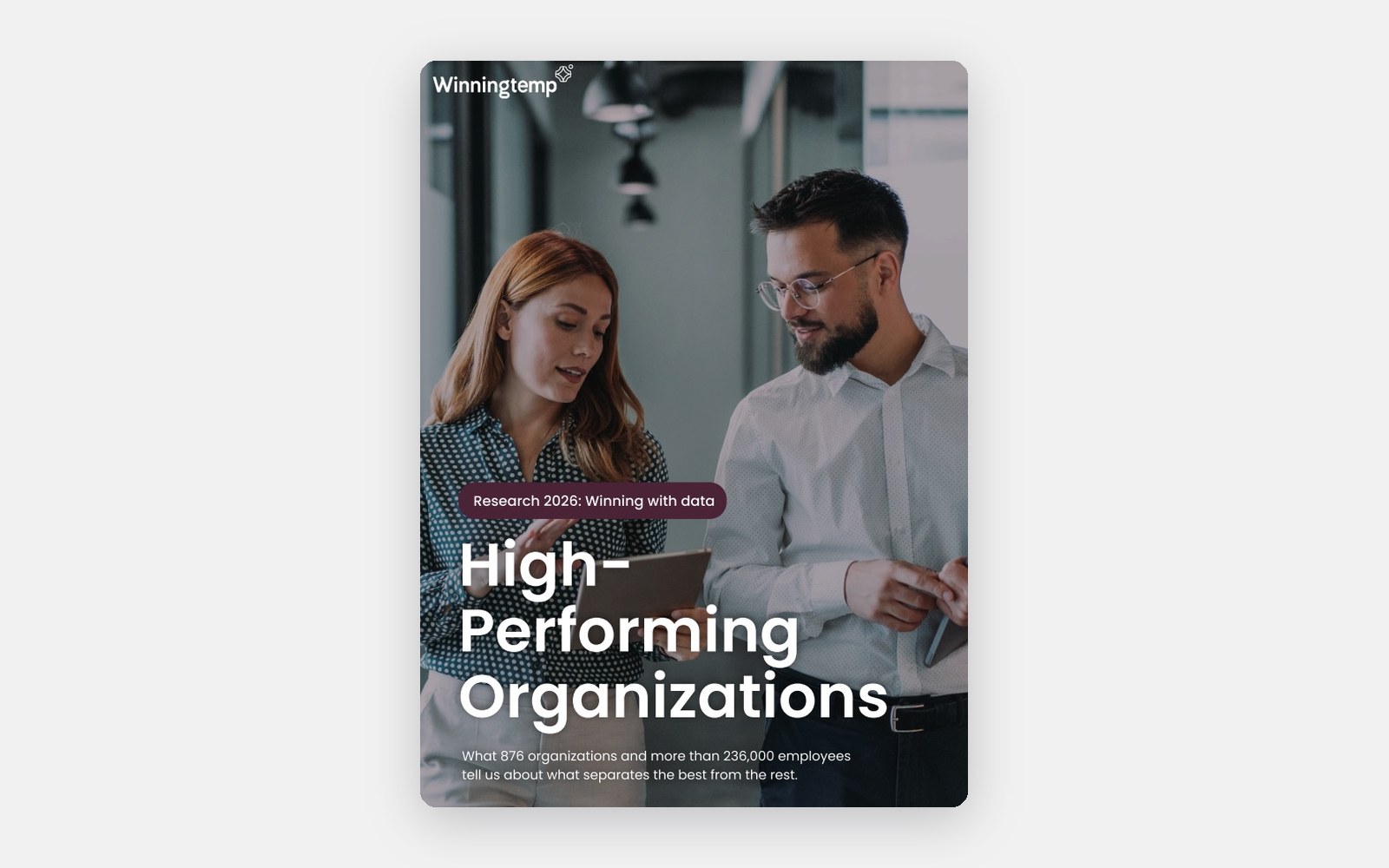
About the guide
We analyzed engagement data from 876 organizations and more than 236,000 employees to find out what separates the best workplaces from everyone else. The result is not a list of nice-to-haves. It is a precise, evidence-based map of what high-performing organizations do differently — and where to start.
A high-performing organization is one that lands in the top 25% of the High Performance Index, a composite of six engagement categories: leadership, trust, psychological safety, team spirit, participation and personal development.
7 things high performers do differently
- They invest broadly, not in one heroic dimension. The best do not win by doubling down on a strength. They win by leaving nothing behind.
- Personal Development is the lowest-scoring category in 85.5% of organizations, and where the gap to high performers is widest.
- Team Spirit and genuine participation in decisions are the strongest independent predictors of high performance.
- Belief in direct managers is near-universal. What sets high performers apart is belief in senior leadership.
- New hires are your most engaged employees. The promises made during recruitment erode fastest over tenure.
- Psychological Safety holds steady across tenure. Yet women report significantly less of it than men.
- Gen Z leads on almost every engagement metric, yet trusts the institution less than any other generation.
The report includes all seven findings, the full methodology, generational and industry breakdowns, and the five priority fixes.
More guides



Fill in your information to access the report

The employee listening platform
© Winningtemp 2026


